
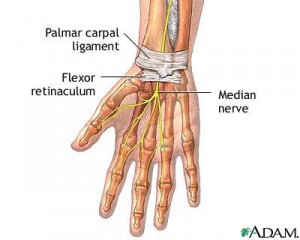
This section explains Carpel Tunnel Syndrome and its typical symptoms.
The median nerve travels through a compartment in the wrist called the carpal tunnel. The ligaments that transverse the nerve are not very flexible. Any swelling within the wrist compartment can put pressure on structures such as the blood vessels. Excessive pressure can constrict blood flow and cause nerve damage.
The symptoms from the compression cause pain, loss of sensation, and decreased function in the hand.
Carpal tunnel syndrome (CTS) is one of the most common job-related injuries. It is responsible for the highest number of days lost among work-related injuries.
It causes over two million visits to physicians’ offices each year. There are about 465,000 carpal tunnel release operations annually, making it the most frequent hand and wrist surgery.
Acupuncture is extremely effective at treating carpal tunnel syndrome. It can eliminate the need for surgery. It can also reduce the use of anti-inflammatory drugs or corticosteroids. In fact, one common reason people get acupuncture is for repetitive stress injuries. These include carpal tunnel syndrome.
What is Carpal Tunnel Syndrome?
Carpel Tunnel Syndrome is a condition.
The carpal tunnel is a narrow passageway in the wrist. It is made up of ligaments and bones.
The median nerve passes through this tightly spaced tunnel. The tendons that connect the fingers to the muscles of the forearm also pass through it.
Carpal tunnel syndrome, also known as median nerve entrapment, occurs when swelling or irritation of the nerve or tendons in the carpal tunnel results in pressure. This pressure affects the median nerve. The median nerve provides sensation to the palm side of the thumb and fingers.
The median nerve controls sensations to the palm side of the thumb and fingers. It also sends impulses to some small muscles in the hand that allow finger and thumb movement.
Symptoms usually start gradually. They include burning, tingling, or numbness in the palm and fingers, especially the thumb, index, and middle fingers.
The symptoms often first appear during the night. As symptoms worsen, pain, weakness, or numbness may appear in the hand and wrist. It can radiate up the arm during the day.
Decreased grip strength may make it difficult to form a fist, grasp small objects, or perform other manual tasks. If not properly treated, CTS can cause irreversible nerve damage and permanent deterioration of muscle tissue.
Diagnosis and Treatment of Carpal Tunnel Syndrome with Acupuncture
From an Oriental medicine perspective, CTS is a disruption of Qi and Blood flow in the area.
It is associated with Cold, Dampness, or Wind penetrating the wrist muscles and sinews.
Acupuncture points, stretching, herbs, and nutritional supplements are chosen to treat accordingly.
In addition to reducing the swelling, inflammation, and pain in the wrist, acupuncture addresses headaches. It also helps with neck pain, shoulder stiffness, and sleeping problems that often accompany this condition.
Your treatment may also consider underlying conditions that contribute to CTS. These include obesity, rheumatoid arthritis, thyroid problems, diabetes, and hormonal changes of pregnancy and menopause.
If you or someone you know suffers from carpal tunnel syndrome, call us today at 808.781.4920. Learn how acupuncture and Oriental medicine can help you.
Sources:
Acupuncture: A Comprehensive Text. By Shanghai College of Traditional Chinese Medicine, 1981
Plastic and Reconstructive Surgery: Volume 105(5) April 2000 pp 1662-1665